

Let's talk

FOR NON-TECHNICAL FOUNDERS

How to build an MVP without a technical co-founder and keep control

An MVP without a technical co-founder is a first version of your product built by senior engineers and product people you hire, not a partner paid in equity. The code, the accounts and the decisions stay in your name.

The drawing shows five things a founder says about their product and, under it, the system part behind each, one store for your data and the accounts you own.

Here is how to build an MVP without a technical co-founder, with every decision explained in plain words. Finding someone who can write code is the easy part. The hard part is knowing the scope, code and plan are right when you cannot check them yourself. BrainStormers gives you two senior people who can: Roger Grekos on product and Thanos Gkanas on engineering.

SOUND FAMILIAR?

What gets in the way when you don't code

Most advice for founders who do not code is a list of tools. The tools changed; the problems below did not.

  • SYMPTOM 01

    I have three agency quotes and no way to compare them

    Usually means: Nobody has turned the idea into a written scope yet, so each quote prices a different product.

  • SYMPTOM 02

    My freelancer went quiet and I cannot open the code

    Usually means: The code, the hosting and the passwords live with one person instead of in accounts you own.

  • SYMPTOM 03

    The prototype works in the demo and breaks with real users

    Usually means: It was never tested, secured or set up to handle more than a few people at once.

  • SYMPTOM 04

    Everyone tells me to find a technical co-founder first

    Usually means: You are being asked to give away equity before anyone has checked that the idea has buyers.

  • SYMPTOM 05

    I cannot tell whether the developers are doing good work

    Usually means: There is no shared plan, no regular demo and no written record of why things were built.

WHERE TO START

Which services fit a non-technical founder

Without a technical partner you usually need product and engineering judgment together. Start with the group that fits.

ONE TEAM

Product and engineering

One team for software product development, from the first scope to launch, with Roger on what to build and Thanos on how to build it.

Product and engineering

ENGINEERING

Engineering

When the idea is clear, an MVP development agency that puts the code in your name gets the first version built. Once you run the product yourself, fractional CTO services for startups keep senior oversight in place, and an AI code audit checks an AI-built prototype before real users arrive.

All engineering services

PRODUCT

Product

Not sure yet that people will pay? Start with evidence. Business idea validation gathers proof from real buyers that the problem is worth solving, before you fund a build.

All product services

IN BRIEF

How much does an MVP cost without a technical co-founder?

The cost of an MVP depends on scope far more than on who builds it. A first version that does one job for one kind of user costs far less than one that tries to serve everyone. The cheapest move is a tight scope, written down before anyone quotes. The main cost drivers are the number of user roles and the integrations, such as payments, logins and third-party data. Two more matter: whether you need a mobile app or a web app will do, and how much personal data you hold. Without a technical co-founder you also need senior oversight, from a fractional CTO or from the team doing the build.

For a rough range on your own feature list, try our planner for MVP development cost. It sorts features into Build first, Later and Cut from the first version, and shows the assumptions behind the estimate. We quote a build only after the Audit step, once the scope is on paper.


Technical co-founder equity or paid senior help: which costs less?

Paid senior help usually costs less for a first version. A committed technical co-founder can be worth far more over the life of the company, if you find the right person. Equity is permanent. A co-founder who joins for the MVP and leaves after a year keeps their whole stake unless vesting is in place. Paid help costs cash now and nothing later.

The honest test is whether the work ahead is a project or a company. If you need someone to build and then run the technology for years, look for a co-founder and give them a real stake. If you need a first version to test the market, paying for senior time keeps your cap table clear for the people who will build the company with you. A common path is both: build the MVP with paid help, then recruit a technical co-founder or first engineer with a working product to show.

HOW WE WORK WITH YOU

How to build an MVP without a technical co-founder: three steps

We work in three steps, and you can stop after any of them. Each ends with something you can see, click or read.

Throughout the work you get:

  • a short written note for every technical decision, with the option we turned down and why
  • a working link to the product as soon as there is something to click
  • code, cloud accounts and domains in your name from the first day
  • a weekly update you can forward to an investor or adviser without editing
  1. 01

    Audit

    We turn the idea into a one-page scope: who it is for, the one job the first version must do, and what we leave out and why. If you already have a prototype, we check what can be kept.

  2. 02

    Build

    We build the smallest version that does that job, in short cycles. You see working software every week or two and decide what comes next, with a plain note on each trade-off.

  3. 03

    Ship

    We launch to real users, set up error alerts and backups, and hand you the code, the accounts and a written guide your first engineer can start from.

Your options for building without a technical co-founder

Five real routes to a first version, each with a different cost in money, equity and control.

  • Find a technical co-founder

    The right co-founder brings judgment, speed and long-term commitment, and that is worth a real stake. The risk is rushing: a partner chosen to fill a gap rather than for fit is expensive to undo.

    Technical co-founder equity is negotiated on timing, risk, role and how long they will lead the technology. Whatever you agree, put vesting in place for both of you.

  • Hire freelancers

    Freelancers are flexible and can be good value for a well-defined task. They work best when someone senior writes the scope and reviews the code. Without that, you carry the integration and quality risk yourself.

  • Hire a development agency

    An agency can deliver a full build with project management included. Before you sign, check who owns the code and accounts, who actually writes the code, and what happens after launch, because the handover is where many projects stall.

  • Build it yourself with AI tools

    AI app builders can get you a clickable prototype in days, which is a real step forward for testing an idea. They also ship code nobody has reviewed. Our note on vibe coding security explains how AI-built apps exposed data in 2026.

    Use these tools to learn, then have a senior engineer review the code before real users and real data arrive.

  • Work with a senior product and engineering partner

    This is what we do: senior people for the first version, paid in money rather than equity. Every decision is written down, so you can bring in your own team later. It suits founders who want a co-founder's judgment for the first version and the freedom to build their own team after it.

THE FOUNDERS

Who builds it with you

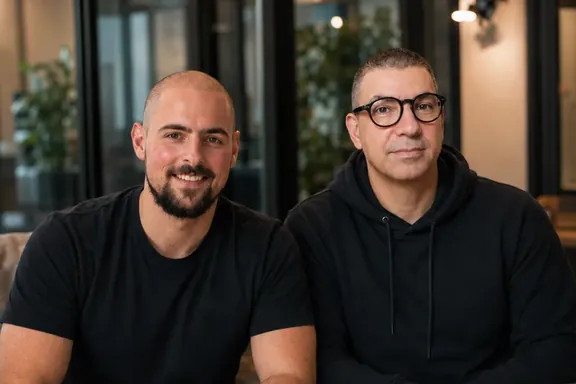
Two founders, two lanes. Roger leads product, projects and scale; Thanos leads engineering. On your MVP you get both.

Roger Grekos

CO-FOUNDER · PRODUCT

Your first version has one job: show that a specific buyer will pay. Anything that does not help show it can wait for version two.

Thanos Gkanas

CO-FOUNDER · ENGINEERING

If I cannot explain a technical choice to you in two plain sentences, I am not ready to make it.

FAQ

Questions non-technical founders ask us

Can I build an MVP without a technical co-founder?

Yes. You can pay for the engineering instead of giving equity for it. What you cannot skip is senior judgment: someone who writes the scope, reviews the code and explains the trade-offs in plain words. Get that from a fractional CTO or a senior partner, and keep the code and accounts in your name.

How much equity does a technical co-founder usually get?

There is no standard number. It depends on when they join, how much risk and time they take on, what they bring beyond code and whether they will lead the technology long term. Carta's data on how co-founders split equity shows most teams do not split equally. Use vesting either way.

How will I know the engineers are doing good work if I cannot read code?

Judge the work by what you can check. Good engineers show working software every week or two, explain decisions in writing, keep the code and accounts in your name and fix bugs without drama. For a deeper check, ask an independent senior engineer to review the code once before launch and once before you raise money.

What should I prepare before our first call?

A few lines on the problem, who has it and how they solve it today. Add anything that already exists: notes, sketches, a prototype or competitor links. Tell us your timing, your rough budget and what a good first version should let you prove. No technical document is needed; working that out is part of the job.

Will you explain technical decisions in plain language?

Yes. Every significant decision comes with a short written note: what we chose, what we turned down, what it costs and what it means for later. When a term needs explaining, we explain it. You should be able to forward any note to an investor or adviser and have it make sense.

What happens when I hire my own engineers later?

They inherit a product they can work on. The code, cloud accounts and documents are already in your name, and the decision notes explain why things are built the way they are. We can help write the role, sit in on interviews and pair with your first hires until they are comfortable running it.

I built a prototype with an AI tool. Can you turn it into a real product?

Usually, yes. AI-built prototypes are a good way to test an idea, but the code is rarely ready for real users or real data. We start with an audit of what you have, keep what holds up, fix security and data handling first, and rebuild only the parts that would not survive growth.

NEXT STEP

Bring us the idea

Tell us the idea, who it is for and where it stands today, even if that is a page of notes. We start with the questions that shape a first scope.